
 2 hours ago
2
2 hours ago
2
April 24, 2021
- STAYED AT #1:2 Weeks
In The Number Ones, I'm reviewing every single #1 single in the history of the Billboard Hot 100, starting with the chart's beginning, in 1958, and working my way up into the present. The column is now biweekly, alternating with The Alternative Number Ones on Mondays. Book Bonus Beat: The Number Ones: Twenty Chart-Topping Hits That Reveal the History of Pop Music.
A critically acclaimed young rapper with a style that doesn't exactly demand attention links up with an internet personality who plays the ukulele. Together, they make a little video for an unfinished half-song, and they post it online. That song-snippet goes viral, and all the people involved decide that the half-song should become a real, finished song. The rapper comes up with another verse and puts out a proper version of the song, with a fully produced beat but with the ukulele still up at the front of the mix. He interrupts his planned album rollout to release the song, and when it finally comes out, it stomps all over everyone's expectations and debuts at #1.
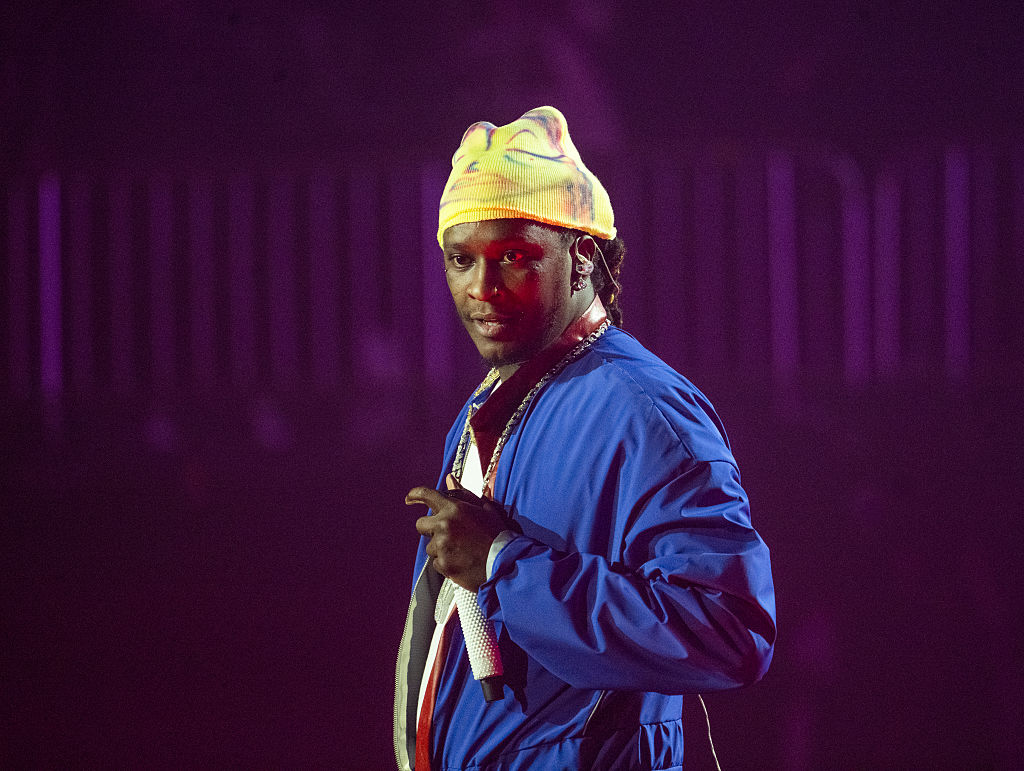
This whole story seemed weird when it happened, and it seems even weirder now, in retrospect. I'd been writing about the 22-year-old Chicago rapper Polo G for a few years at that point, and I'd convinced myself that he could be one of the greats. But when he put out his big hit "Rapstar" in 2021, I didn't think anything was special about the song. It was a solid but unspectacular example of what Polo could do, and its backstory missed me because I don't watch ukulele videos. Somehow, though, this one Polo G song hit a nerve and suddenly became his biggest hit ever.
Five years later, "Rapstar" has left virtually no cultural footprint, and nobody is checking for new Polo G music. He's had run-ins with the law that must've slowed things down, but he never stopped recording. He just faded into the background so slowly that I barely even noticed that I wasn't paying much attention anymore. This guy had an out-of-nowhere pop chart-topper, and he got almost no career momentum out of it. So "Rapstar" now serves as a foggily remembered one-off situation, not as the culmination of a gradual rise. A few years on, I struggle to remember why I thought Polo G was so great in the first place. "Rapstar" doesn't really answer that question. On its own terms, though, it's a pretty good song.
Two different times, in 2019 and 2021, I told Stereogum readers that Polo G had made the year's best rap album. I referred to Polo's debut Die A Legend as "the new Chicago blues." I immediately argued that his third album Hall Of Fame was a "classic." Look, I get excited, OK? I overstate things. I write a lot of posts on this website every day, and I never read my stuff back unless I'm working on some kind of retrospective column. I never think about how these things will age. I just go.
For a couple of years there, I was convinced that Polo G was 1995 Nas or 2009 Gucci Mane or something. That version of myself feels distant and mysterious to me now. But Polo G was always really talented, and I've enjoyed having a reason to go back and listen to the two albums that I loved. I just don't love them the same anymore.
There's a very good chance that you, Number Ones reader, did not read my old weekly rap column when I was busily hyping up Polo G. There's a good chance that you don't know who Polo G even is. Here's who Polo G is: Taurus Tremani Bartlett, a young man who grew up in housing projects on Chicago's rapidly gentrifying North Side. (When Polo was born, the #1 song in America was R. Kelly and Céline Dion's "I'm Your Angel.") Polo's old neighborhood was a 15-minute drive away from the white hipster neighborhood where I lived when I moved to Chicago in 2009. Polo later told Pitchfork that he felt like the city was trying to push his family out of their own neighborhood.
Polo's family was working class; his mother managed residential properties and, later, her son's career. Polo started messing around with rap when he was a little kid, and he would've been in middle school when Chicago drill rappers like Chief Keef and Lil Durk started exploding onto the national scene. As a teenager, Polo was arrested for stealing cars, and he decided to turn music into his real focus when he was locked up. He finished high school and got accepted into Lincoln University, an HBCU in Pennsylvania. But on the day that he was supposed to leave for college, he decided that it wasn't what he wanted to do — partly, as he later told Rolling Stone, because he just didn't have anything to wear on the first day. Rap would be his way out instead.
Polo posted his first track "ODA" online in 2016, when he was 17. Early on, he made the same kind of bleak, hungry Chicago drill as many of his peers. But on viral tracks like 2018's "Finer Things" Polo's approach evolved into a gravelly singsong that was clearly indebted to Atlanta stars like Future and to Lil Durk, who was the most melodic and durable of the original Chicago drill figures, at least until he got himself thrown into jail for who knows how long. (Durk's highest-charting lead-artist single, the 2023 J. Cole collab "All My Life," peaked at #2. It's a 7. Durk also guested on Drake's "Laugh Now Cry Later," which peaked at #2 in 2020. It's a 6.) Like other drill rappers, Polo G made music full of death threats and videos full of dudes brandishing guns, but in both his delivery and his writing, he added a contemplative, melancholic edge. From a young age, he had gravitas.
Thanks to those early viral hits, Polo G landed on Columbia Records' radar, and an A&R rep connected him with Einer Bankz, a Swiss-born rap producer and ukulele YouTube guy. Bankz grew up in San Francisco, and he got his first taste of viral fame when someone caught a video of Snoop Dogg, an artist who has appeared in this column a few times, rapping while Bankz played ukulele. That led Bankz to a weird little niche as the rap ukulele guy, making viral videos with people like Roddy Ricch and DaBaby. When Polo was on the come-up in 2018, Bankz met up with him, and they recorded a ukulele video version of Polo's early single "Battle Cry" together. They clicked pretty well and stayed in touch, and Bankz became a regular part of Polo's album rollouts.
But Einer Bankz didn't have anything to do with Polo's first hit. When he was 20, Polo got together with 18-year-old Bronx sing-rapper Lil Tjay to make "Pop Out," a hypnotic anthem about, among other things, being sad about having to kill you. (Lil Tjay's highest-charting single, the 2021 6LACK collab "Calling My Phone," peaked at #3. It's a 4.) I loved "Pop Out." I would just play that song over and over. And I guess a lot of people felt the same as me, since "Pop Out" crossed over. The song came out in January 2019. It cracked the Hot 100 in April and peaked at #11 in July. It's now platinum nine times over.
Even after loving "Pop Out," Polo's debut album Die A Legend took me by surprise when it came out in June 2019. Polo could really rap when he wanted, but he seemed more interested in wobbly baritone incantations about violence and depression. He picked simple, unadorned beats, and he found little melodic pockets on those tracks, radiating wisdom and confusion in equal measure. When he sang about mourning friends who were murdered too young, he made you feel it. When he rapped about spending money, it sounded hollow, perhaps intentionally. It's a whole album about reeling from trauma, an artistic statement that never announced itself as an Artistic Statement. Eventually, the album went double platinum.
Less than a year after Die A Legend, Polo released his sophomore album The GOAT, a perfectly solid record that still felt like a rushed attempt to keep his momentum going. None of the singles popped off like "Pop Out." The highest-charting of them was "Flex," a collaboration with Polo's late friend Juice WRLD, which peaked at #30. In summer 2020, Polo reached the top 10 for the first time as a guest on "Hate The Other Side," a posthumously released Juice WRLD track that also featured Marshmello and Tha Kid Laroi. ("Hate The Other Side" peaked at #10. It's a 7. Juice WRLD's two highest-charting tracks, 2018's "Lucid Dreams" and the posthumous 2020 Marshmello collab "Come And Go," both peaked at #2. "Lucid Dreams" is an 8, and "Come And Go" is a 7. Marshmello also has two #2 hits, "Come And Go" and the 2018 Pompeii collab "Happier," a 6. Tha Kid Laroi will appear in this column pretty soon.)
Plenty of deep cuts from The GOAT racked up a great many streams, and the album is now triple platinum. The record came out during the early pandemic, so Polo had to scramble to find ways to promote it. That's where Einer Bankz comes back into the picture. Polo and Bankz had recorded a few videos together since they made that "Battle Cry" clip a few years earlier, and they'd talked about collaborating. They'd even recorded a few tracks that never came out.
One day, Bankz was sitting around Polo's house in LA, noodling on his ukulele while Polo finished up a day of virtual interviews and promo videos. Polo heard Bankz play a melody that he liked, so he said that the two of them should shoot a video right then and there. Polo already had a verse that he wasn't sure how to use, so he sang that verse over the ukulele, and Bankz posted it online. The video, with Bankz in his facemask in Polo's sparsely decorated living room, is sloppy, full of room sound and dropped notes. It still went viral enough that it threatened to overshadow Polo's album release.
Tens of thousands of people used that song-snippet in TikTok videos. People started to pester Polo G about when the actual song would come out, and some made their own beats to the track and posted them on YouTube. For a while, Polo insisted that there was no actual song, but then he got the message that it should become one. He wrote a second verse, and he and Einer Bankz re-recorded everything, with Bankz fixing all the blown notes from that video version. Bay Area rap producer Synco came in to flesh the track out, doing his best to give the song a bit more dimension through a few added melodic flourishes without overwhelming the original acoustic simplicity.
A couple of other people also have writing credits, but not producing credit, on "Rapstar." One of them is Murda Beatz, the Canadian rap producer who has already been in this column for working on Drake's "Nice For What." The other is Ryan Vojtesak, a white guy from Atlanta who goes by the name Charlie Handsome. Handsome started out as a Post Malone collaborator, and he worked on a bunch of rap and pop records before becoming the go-to guy for the giant country star Morgan Wallen. We'll see Handsome in this column again. I have no idea what Murda Beatz and Charlie Handsome did on "Rapstar," but they're in the credits.
In the years before "Rapstar," two different songs with the extremely similar title "Rockstar" reached #1 on the Hot 100 — first Post Malone and 21 Savage in 2017, then DaBaby and Roddy Ricch in 2020. Polo G's "Rapstar" sounds a lot like the DaBaby/Roddy Ricch "Rockstar," what with its airy melodies and its fluttering riff. But Polo's track doesn't have the same energy as that one. Even when Polo flexes, there's no ebullience to "Rapstar." Instead, he sounds depressed. It's a choice.
Polo G's single greatest subject has always been his inability to make sense of the things that he has experienced. That hits a little different when he's a platinum-certified star rather than an unknown kid in Chicago, but the whirlwind of fame has its own deadening effects. On the "Rapstar" hook, Polo tries to sound triumphant: He's flying around the world, buying BMWs, making $2,000 per minute. But on the verses, everything comes crashing down.
Over the course of "Rapstar," we learn that Polo can't or won't forge a romantic connection: "Only bitch I give a conversation to is Siri." (That's only a flex until you actually think about it, at which point it becomes crazy depressing.) He's trying to smile in public to hide his exhaustion, and he gets high so that nobody will notice how insecure he is. "Anxiety killing me, I just wanna leave Earth/ When they ask if I'm OK, it just make everything seem worse/ Try and explain your feelings, sound like something you rehearse" — Polo delivers those lines with downcast resignation, his confessions arriving in between lines about how he's the new 2Pac and his pants are designer. (Polo initially wanted to call the song "Amiri," but the designer evidently objected.)
"Rapstar" has a weird effect on me. It's truly a pop-rap song. The ukulele riff is subtle ear candy, and Synco layers on dramatic pianos and adds drama by building in moments where the beat drops and the resolution sharpens. In its melodic insistence, "Rapstar" isn't that different from something like 24kGoldn and Iann Dior's "Mood," a giant hit that came out a little while earlier. But Goldn and Dior had obnoxious teenage pop-punk energy, and Polo has absolutely none of that. He sounds like a numb, flattened kid who could really benefit from some therapy. Considering the turns that Polo's life took over the next few years, maybe therapy would've helped.
"Rapstar" was the right song at the right time. Over the two previous years, Polo had built up a lot of goodwill and momentum among rap heads, and he'd accidentally generated a lot of anticipation with that ukulele video, which functioned a lot like all the teasers that Olivia Rodrigo posted before finally sharing "Drivers License." The song also existed at the convergence point of a few different trends.
There was all the pain rap, for one thing. That's a deceptive genre name, really. Artists like Rod Wave, NoCap, and Rylo Rodriguez were all taking off around the same time as Polo released "Rapstar." Those guys aren't really rappers; they're gospel-inflected Southern blues singers who sing through Auto-Tune over rap beats. The line between rapping and singing always blurs, but those guys took Future's melodic style way over into the singing lane. Polo's not Southern, and he straddles the line more. He belongs in the same nebulous melodic rap category as Lil Durk, Lil Baby, or NBA YoungBoy. But with that bare ukulele backing, "Rapstar" his the same sad-mellow tone as Rod Wave and his peers.
Polo also had the association with Chicago drill music, even if his own music usually didn't have much to do with drill. By the time "Rapstar" came out, drill had gone global and spawned its own tributaries all over the world. In the UK, where Tion Wayne and Russ Millions' anarchic posse cut "Body" reached #1 around the same time as "Rapstar," drill could serve as crossover party music. New York drill rappers like Pop Smoke adapted the production style of UK beatmakers rather than Chicago ones. You could find versions of drill in Sweden, Italy, Ghana. Wherever it went, authorities associated the music with lawlessness and tried to clamp down on it. At the time, I wrote that "Rapstar" was the first song from a drill artist to reach #1 in America. That's not quite right, though. Polo's not really a drill artist. He's someone who's generally associated with drill, and then that didn't really matter, since drill music still hasn't flooded the Hot 100.
Before Polo switched up his timetable to release "Rapstar," he was in the middle of rolling out Hall Of Fame, his third album. He'd already produced a couple of moderately successful singles, the moody "Epidemic" and the actual drill track "GNF (OKOKOK)," which peaked at #47 and #55, respectively. He quickly shot a glossy "Rapstar" video, which includes an appearance from his incredibly cute toddler and which came out at the same time as the song. "Rapstar" was positioned to become a crossover hit, but it did better than anyone expected. In its first week, "Rapstar" got more streams than any non-"Drivers License" song from the first half of that year.
"Rapstar" had enough juice to eke out a second week at #1, and the song is now platinum eight times over. But "Rapstar" didn't have a super-long chart run, and Hall Of Fame went double platinum, which was right in line with Polo's two previous albums. For the moment, "Rapstar" has more streams than any other Polo track, but it's quickly losing ground to "Martin & Gina," a 2020 song that peaked at #61.
Hall Of Fame came out in June 2021, and Polo had a record-release party in Miami. Local cops arrested Polo and his 16-year-old brother, who raps under the name Trench Baby, while they were leaving that party, charging the two rappers with a litany of crimes including assaulting an officer. A few months later, Polo got arrested again in LA, this time for carrying a concealed weapon. In 2023, the LAPD arrested Polo and Trench Baby twice in a two-day period, and their charges included kidnapping, robbery, and assault with a deadly weapon. A year after that, Polo got another felony gun charge. Thus far, he's avoided any prison time, but Trench Baby now faces murder charges for a drive-by shooting.
I have to imagine that Polo's legal trouble was probably one of the things that held him back from stardom. Maybe "Rapstar" was always going to be a one-off and he was too internal and low-energy to get there anyway. Polo has continued to release music, and he followed Hall Of Fame with Hood Poet, a 2024 album that pretty much evaporated on impact. He hasn't been back into the top 10 since "Rapstar." His biggest chart appearance since then has been a guest-verse on "Better Days," a disco-pop track from Swedish dance group Neikid and English singer Mae Muller that peaked at #23 later in 2021. Polo hasn't been on the Hot 100 at all since 2023, when his Hood Poet single "Barely Holdin' On" debuted at #68 and then fell off the chart a week later.
Polo G was a rap star in the weeks immediately following the release of "Rapstar," and then he hasn't really been one since then. It's sad. Polo had a powerful voice and a whole lot of promise, but it seems like he got caught up in the chaos and violence that always hung over his music. Maybe he didn't have the right people around him, or maybe he just refused to believe that he'd earned himself and his family a better life. Maybe he'll come back. But the moment that allowed "Rapstar" to become a sudden pop hit is definitively over now.
We've seen versions of this story many times in this column. It's not easy to make a song that leaves an impression on the world. To pull it off, you have to beat the odds. And if you plan to stick around, you have to beat the odds again and again and again. Polo G beat the odds once.
GRADE: 7/10
BONUS BEATS: Another guy who beat the odds once is the one-eyed New Jersey sing-rapper Fetty Wap, who had a string of huge hits in summer 2015 and who then pretty much dropped off the face of the earth. In 2023, he was sentenced to six years in federal prison on charges of conspiracy to distribute drugs, and he got out in January. On Friday, Fetty released his post-prison album, and it includes "Never Tell," a song built on the "Rapstar" beat. Here he is, performing that track on the On The Radar video series:
(Fetty Wap's biggest hit is "Trap Queen," which peaked at #2 in 2015. It's a 7.)
The Number Ones: Twenty Chart-Topping Hits That Reveal The History Of Pop Music is out now via Hachette Books. Looking for something real? Stuck in a deep search? Buy a copy here.









 English (US) ·