
 2 weeks ago
19
2 weeks ago
19


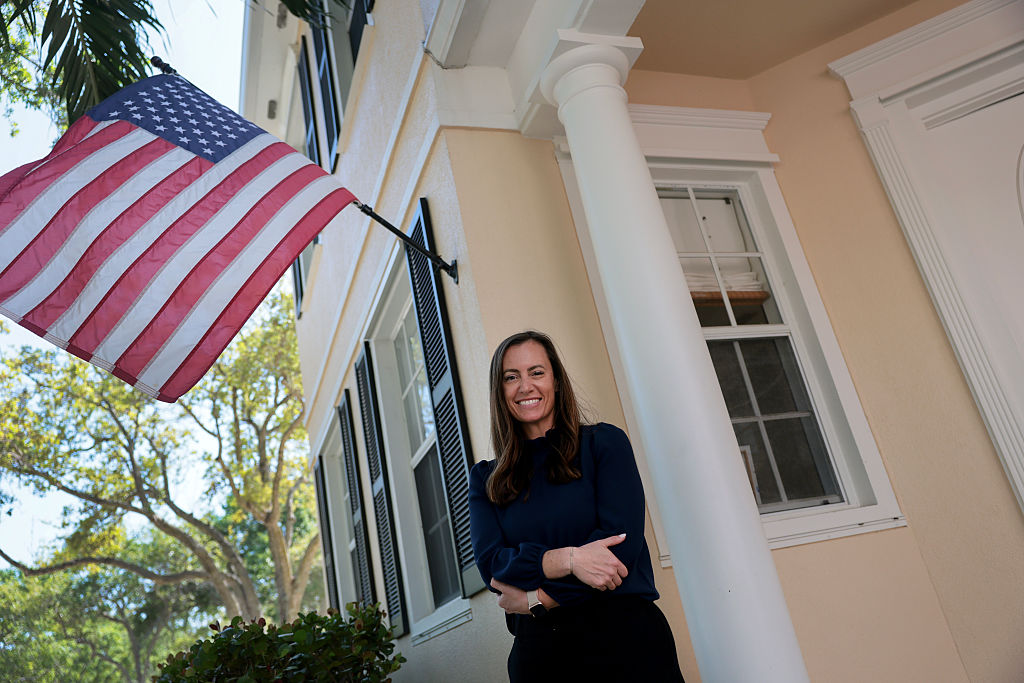
Costume: Suelem de Oliveira da Silva
Calling Loud Bloom a debut feels almost mischievous, given Olof Dreijer’s seamless, 25-year pedigree both as a musician and a producer.
Even the title can be seen as a kind of gentle provocation, inviting in a revamped sense of self that has come to welcome colour and exuberance. The idea of a late bloom speaks for itself, but a loud bloom hits different, spinning years of careful tending into a personal sound-garden that he’s finally allowing to grow a little wild and move out of his control.
The metaphor isn’t just for decoration, he says. Though many of the songs are named after different kinds of flora, from the humble fern to the Chinese medicinal berry shisandra, Loud Bloom didn’t start with botanical mechanics. The theme emerged from something much more personal, specifically the way he clings on to his creations, seeing them less as compositions and more as companions. Rosa, iris, lily, fern – it’s no coincidence that these names could just as easily belong to people as plants. “Each track is almost like a little baby coming into the world,” he says with a soft laugh. “And I’m very bad at letting go of them.”
Sign up to Best Fit's Substack for regular dispatches from the world of pop culture
Speaking to Best Fit from his studio in Barcelona, where he lives with his partner, Brazilian creative director and costume designer Suelem De Oliveira Da Silva, Dreijer says the ‘loud’ in the title “has a lot to do with self-love.”
“For a long time I was very hard on myself,” he adds, explaining how his “coming back in a loud way” is less about decibels than it is about a crucial shift in attitude. For decades he’d been labouring away under the view that, in order to justify his being yet another cis white man in an industry already overrun with them, he had to be exhaustively politically engaged, and explicit about it. “I had all these ideas that I had to be the most responsible citizen I could be,” he says, “and that meant having to be very serious almost all the time.”
This was especially true of his work alongside his sibling Karin in The Knife, who mutated the electronic avant-pop zeitgeist and paved the way for the likes of Charli XCX, SOPHIE, and even the rebirth of Robyn, whose world-conquering second act was directly inspired by Olof and Karin’s independent spirit. Growing up in Gothenburg with a father who was active on the far left of Swedish politics, activism was a foundational part of their childhood – attending demonstrations, learning chants, and making signs – and that inevitably engraved itself into the siblings’ music as The Knife.

Over time, it’s fair to say that their political awareness became almost inseparable from the music, and especially from the way in which it was presented. Confrontational, theatrical, and conceptually dense, The Knife’s performances escalated in ambition from album to album, challenging people to question gender, capitalism, and other forms of power structures – even the one between artist and audience on their infamous Shaking the Habitual tour, which outright rejected traditional concert dynamics and broke a few brains (mine included) in the process.
At the same time, Dreijer grew more deeply involved in social work, both in Sweden, where he taught creative music production to immigrant youth, and in Berlin, where he helped to establish a music school for refugees. It’s work that he’s proud of and remembers it as "genuinely fun," but in working so closely and for so long with people of precarious status, he says, the ugliness of the systems that handle them seeped bit by bit into his own perception of self.
“I somehow internalised these big, structural problems and carried them around on my own, and that’s not a way that I can recommend,” he says wryly. “I started to feel that we didn’t need any more people like me in the music industry, which was already very white and male. So I stepped back, and it took me maybe 10 years to come around from that.”
In hindsight, he sees that reaction and withdrawal as a kind of overcorrection that Loud Bloom sets out to rebalance. Inspired by working with younger musicians who had a “more punky approach” to music, less confined by expectations and a need to justify their existence, he worked his way back to joy.
It’s almost a cliché of Instagram activism these days to say that joy is an act of resistance, but Dreijer sees the truth in the slogan – but only if we take joy seriously. With its bright visual language and handmade rhythms that brim with life, I’d argue that Loud Bloom does exactly that, elevating joy to a principle of art rather than a nice-to-have or side effect.
Dreijer’s process in that sense is as purposefully manual as ever, rejecting the idea that personality can be easily programmed. “To me, sequencers are very inhuman and boring,” he says with a shrug. “If I go through sample libraries, most of it sounds like music for an ad or something in the background and I don’t want that, so usually I make all my sounds from scratch and play everything myself. The percussion, all of it.”
In terms of composition, each track starts with an abstract narrative that has more to do with shapes and imagined scenes than any specific story. “I do get excited when it feels like a story, but it’s open to interpretation,” he says, and Loud Bloom as a whole adheres to that same idea. “If there’s a narrative to the album, it’s that I’m trying to do something that I feel is less commodified,” he explains. “But we live in extremely commodified times where everything and nothing is a product, so I work very intuitively to find something that feels new enough to give me an honest feeling of excitement. I dance a lot down here in my little room.”


Naturally, Dreijer is very aware of the fact that his music sits in an open-ended, indeterminate space between familiarity and strangeness, and that what he thinks is accessible to an untrained ear is not always a shared point of view. “I know many people find what I do weird,” he says, laughing, but for all its giddy experimentation, Loud Bloom is still very much in dialogue with certain, familiar dimensions of dance music history. Not led by them by any means, rather steering them into less well-worn terrain.
“There is usually something in the sound that feels slightly recognisable,” he says, nodding. “If we’re talking about inclusivity, I think there needs to be at least a little bit of the record that someone can recognise their own experience in, but it can be twisted or done in a slightly different way.”
Take, for example, the reconditioned ‘90s breakdance energy of “Blood Lily”, the screwball house bump of “Makwande”, and the innovative modern club fusions of “Rosa Rugosa” (Angolan kuduro meets flute-forward folk dance) and lead single “Echoed Dafnino”, which began life as a remix of an original track by Cairo-based Sudanese singer MaMan, but later grew into a full collaboration, with MaMan adding new vocals and wanting to do more together later down the line.
“It’s somehow like painting, the way he sings,” Dreijer says, excitedly. “It’s just so instant, the way it hits you in the belly. His melodies are amazing, and the way he writes lyrics feels so big and timeless.”
Dreijer may have been born and raised in Gothenburg, but he describes himself as “very much a product of Berlin,” and his ongoing mission to look beyond the Western hegemony of dance music came directly out of the predominantly white, predominantly instrumental pulse of the German capital’s clubs. A late addition to the album, “Makwande” finds him teaming up with South African MC and afrorave progenitor Toya Delazy who got in touch after hearing his mashups of her work and floated the idea of making something together.
“At first I was like, ‘I really don’t have time because I have to finish my album,’” he says, laughing. “But there was this one track that I thought could work with her vocals, so I went to her in London and we did it, and I’m so grateful for that. She has such a deep, tough voice but she’s also so sweet. She has such a range beyond her amazing rap language, and I think that’s quite rare. The song also has this message of taking ownership of how you want to be perceived, so it’s interesting in that sense too.”
Loud Bloom’s third vocalist, Colombian–Swedish percussionist and DJ Diva Cruz, will be familiar to anyone who enjoyed 2024’s Brujas EP or caught one of the live shows. “It’s funny that this track is on the album because we made it super quickly,” he says. “And whereas the two other tracks from Brujas are very political, sort of protest songs, ‘Acuyuye’ is really just a song about food.”
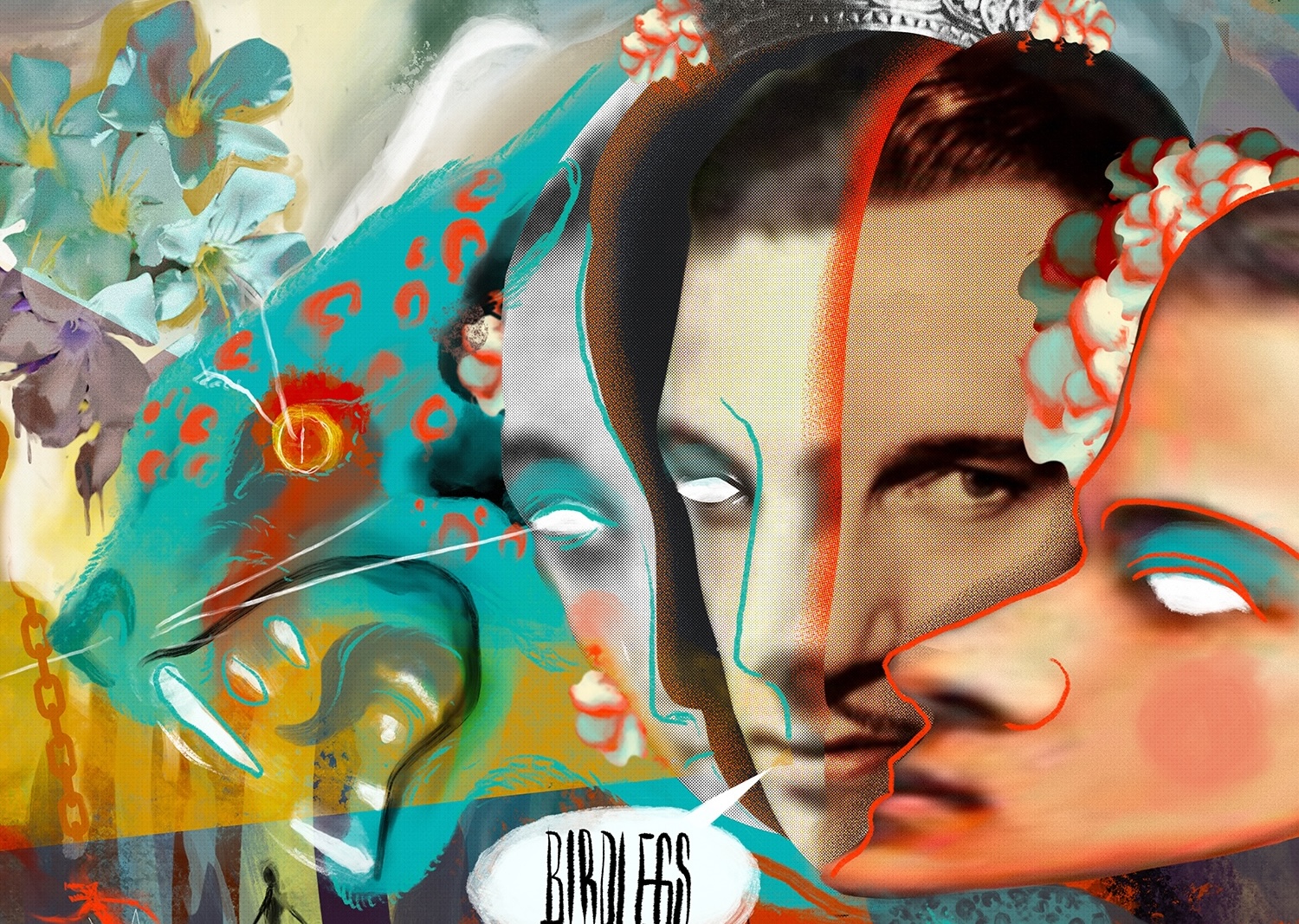
Throughout our conversation, Dreijer keeps coming back to the idea of more colour and more emotion, whether in relation to his own paintings that shape Loud Bloom’s vibrant artwork or to the kicky, unexpected textures and unconventional percussion that he uses liberally throughout. The same idea comes up again when we talk about his return to his early obsession with techno, a substantial part of Loud Bloom’s journey of self-love. “I grew up with techno, somehow, but I feel like there is still a lot to explore with it,” he says, “like I’m doing here, bringing in a lot of melody and using different, less exhausted grooves. I mean, I love techno for it being ‘sci-fi music,’ but there are so many ways to be creative with that.”

An avid reader and watcher of sci-fi, Dreijer points to New Orleans-based Nigerian author Akwaeke Emezi as a favourite example of someone who works across genres, including sci-fi, to deliver visionary and progressive ideas through loopholes in the mainstream, much as he has spent a lifetime working to do. He’s also a fan of the Apple TV series Foundation, starring queer heartthrob Lee Pace, and – perhaps more towards the bad taste end of the sci-fi spectrum, he says – Seth MacFarlane’s The Orville.
“There’s one episode [“About a Girl”, s1e3] where there’s a species who are almost exclusively men who give birth only to men, and then one day, by coincidence, one egg hatches as a girl,” he explains. “So then they have this whole discussion about whether to do affirmative sex surgery or not, and it’s super radical and interesting.”
Met with the suggestion that his own work has been radical, Dreijer pushes back gently and downplays the notion that he’s made a habit of taking artistic risks. Even with the divisive Shaking the Habitual tour, he felt there was more of a generosity to the gesture than risk. And as for his run of releases and shows as drag alias Oni Ayhun, from 2008–2010, his primary reference was avant-garde icon Diamanda Galás, a true aesthetic revolutionary who’s still pushing boundaries in her seventies.
“I had a lot of fun with the drag, and often made live shows motivated just by items of secondhand clothing I found, but I was in a very different time of my life then,” he says, alluding to the “male white guilt mode” he spoke about earlier. “Now I’m on this journey of allowing myself to front my own music, and it’s still something that I’m getting accustomed to. I’m not a performance artist in that sense, but I’m excited to play around with some fun, creative light stuff and make a nice, colourful show.”
With Loud Bloom having been, essentially, 25 years in the making as an Olof Dreijer debut, it’s interesting that he sees it more as a compilation than an album-album, and not just because about half of the material has been released in some shape or form across his various EPs since coming back with “Rosa Rugosa” in 2023.
“I’m actually not as stuck on the idea of albums the way that many people of our age who grew up with LPs,” he says, almost sheepishly. “But I’m already going into a new chapter, musically, so it’s nice to compile things that make some sense together, and I do feel like the songs give each other another layer of meaning in some way.”
It’s an almost unexpected bonus for Dreijer, whose love of the craft is so rooted in “the brainy work” of puzzling and problem solving, trying to match melodies with beats and creative ideas that are so distinctively his. “It’s really a great luxury to make music and it makes me very happy,” he says, summing up his current state of mind, and it’s a great word – luxury – for Loud Bloom too. Planted by movement and gathered with joy, it dares to be delightful at every turn.









 English (US) ·