
 1 month ago
36
1 month ago
36
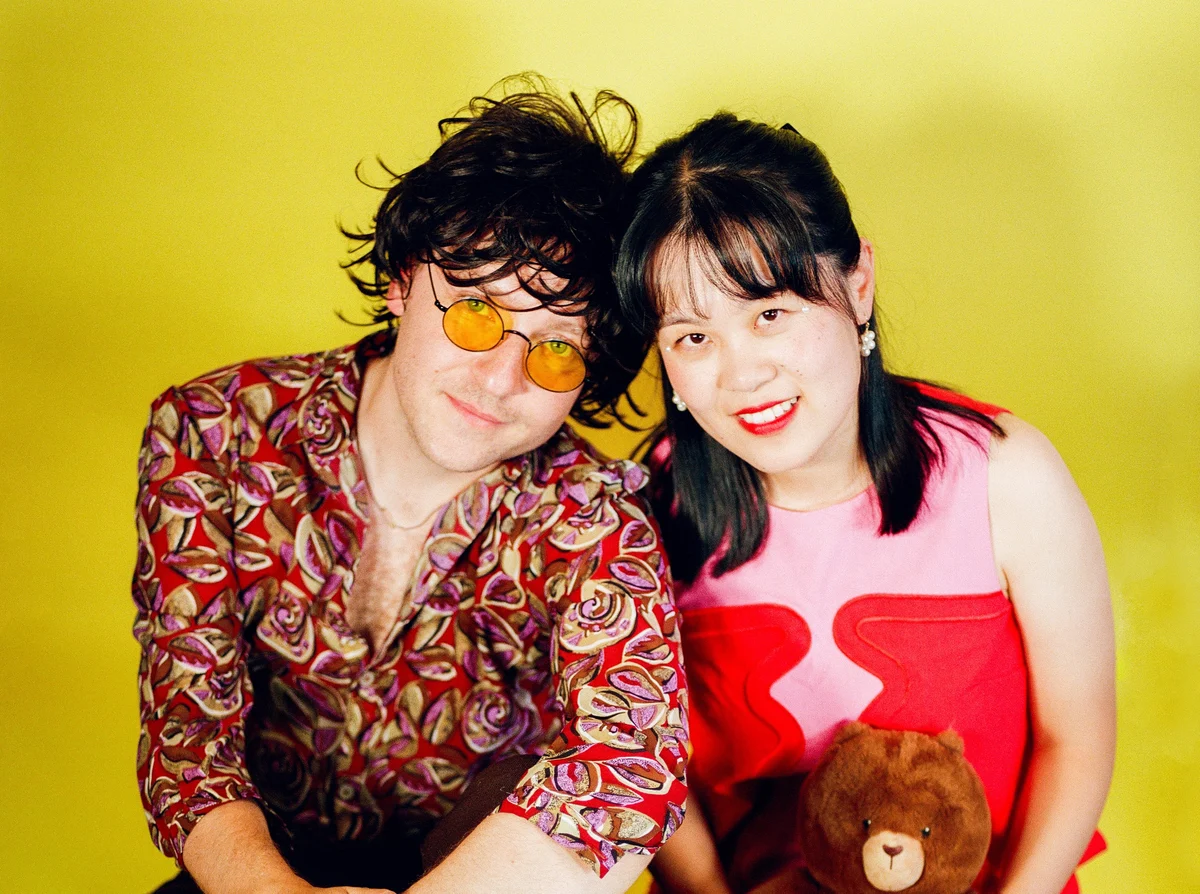
It's the songs. A lot of indie bands these days are filtering '90s alt-rock inspo through the lens of Alex G-era Bandcamp, but Swapmeet have the tunes to set them apart from the pack. The Adelaide quartet's 24-year-old members share songwriting duties and often switch instruments, running the gamut from whispery beauty to explosive abrasion without ever losing the identity they've honed since first joining forces as teens. After signing with the reliably great Los Angeles indie label Winspear, they've spent half a year rolling out their debut album Mount Zero, and each subsequent single has further affirmed their mastery of the form.
"I Know!" emerged first and made a resounding impression. It's a deceptively simple anthem in which two chords and a piercing, repetitive hook become the foundation for a miniature symphony of moving parts, sounds moving in and out of the arrangement with the precision of a machine gaining sentience. "Sand" followed, looser and shaggier, pivoting from an airy glide to a sludgy emotional descent as Venus O'Broin and Jack Medlyn traded vocals. "2 C U" was short but sweet, building from sparse acoustic origins into another marvel of moving parts. And perhaps no track yet has a moment as overwhelming as the one near the end of "Halfway," when the song rips open into a triumphant torrent of guitars.
Today Swapmeet are sharing one last advance preview of the album ahead of its release this Friday. On "Bonny," contagious propulsion and melancholia are at odds from the start. The mood shifts several times, a few brilliant chord changes altering the atmosphere of the song, but the momentum never breaks. It's one of many songs on Mount Zero — named for a landmark about halfway along the nine-hour drive between Adelaide and Melbourne — on which the timeless and modern anxieties of youth tangle up into something spectacular, carefully sculpted yet coursing with life.
I was happy to hop on a video call with O'Broin and Maxwell Elchick last week to discuss Swapmeet's origins and their path to such a tremendous debut. Below, hear "Bonny" and read our conversation.
As a big dumb American, I know very little about the cultural distinctions between cities and regions in Australia. So I was wondering if you could tell me a little bit about Adelaide as it relates to the rest of Australia, culturally or also in terms of the music scene. Is there anything distinctive about your city and its history that I should know?
VENUS O’BROIN: It's the one city that wasn't made from the convicts when they came over. It was settled a bit later by folks. I think we have less of a difference between cities than in America. But we are the random city.
MAXWELL ELPHICK: Geographically, we're on the south part of Australia. So it's kind of like us, and then Antarctica is below us. So yeah, it's also not really in a spot where people are passing through, either. No one's coming to Adelaide to get anywhere else. It's not a tourist destination at all. It's just a city that's kind of away from everything.
Do you think there's anything particularly Adelaide-like about Swapmeet? Is there anything about your band that you take specifically from being where you're from?
ELPHICK: I think our live performance is probably our most Adelaide thing.
OK, how so?
ELPHICK: I don't know, I guess just how we started off with how we play at shows. ’Cause it was during COVID, and also people in Adelaide tend to not dance very much. So yeah, the whole Adelaide thing is being really super energetic while performing and going kind of as crazy as possible, as loud as possible. Which we found when we would get to other cities, it would almost look like we're doing too much.
O’BROIN: It’s a very unpretentious music scene. Or at least it used to be.
You think it's becoming more pretentious?
O’BROIN: Absolutely, and it's our fault.
You're the ones making it more pretentious?
O’BROIN: Well, I think our friendship group kind of formed around making music that was a little bit different from what had been made previously, a bunch of folks that liked to talk about music. I don't know if that was the status quo before. Like, I feel like the scene before us was just about, you know [adopts “rawk” voice] “Yeah, rockin’ and rollin’! Drinking beers!” And then we started to take it a little bit too seriously, but then I think it's… it's good.
I mean, yeah, taking it seriously seems to be working out for you.
O’BROIN: Yeah, somewhat. Yeah, seriously.
You were talking about the live show just being very high energy. Listening to your EP and the album back to back, it feels like on the recording side of things, you turned the energy level way up from the EP to the album. Was that a conscious choice?
ELPHICK: I think that's just us getting better at recording and kind of knowing what we're going after. Like before it was very — it still is experimental, but before we were still figuring out, I guess, what we wanted the songs to sound like. Because it was very difficult bridging that gap between how we would play it live to how it would sound in the recording. Whereas now in the recording we really know how we want those ones to sound.
There's a certain kind of experimenting in terms of learning how to record, like just kind of fumbling your way through, and then there's a different kind of experimenting where it's just like, “We are kind of masters of the studio now, we know what we're doing, and so we can experiment in a different way.”
O’BROIN: Oh yeah, exactly like that. Masters of the studio!
Maxwell, in one of the press releases you had this quote: “Mount Zero is a place you pass but never go. It became a symbol for people we'd see but never meet. When you're always in a different city and trying new things, there are a lot of experiences you observe but never get to fully explore." Why did this concept appeal to you when defining your album?
ELPHICK: It was just kind of the period of when we wrote the album and recorded it, I guess. It was such a specific point of time where all those things were happening. And I guess it's easy to write about and easy to put that into the music when you're experiencing it, at that moment, rather than like that happening and trying to reflect on it later.
So it's kind of like shorthand for this idea of being constantly on the go, never really getting to stop and reflect on anything, but sort of the young band way of going, “Go, go, go.”
ELPHICK: Definitely. I think it's also not just in the sense of the band stuff, but early 20s does seem very “Go, go, go.” You don't really know exactly what you're doing yet and still figuring it out. It feels like when you're a teenager, you have that endless time to just do whatever, but then you become an adult, it feels like stuff has to happen fast and you don't really have time to reflect on it.
I read that the album is about “first loves, first heartbreaks, first embarrassments, first disasters.” OK, what disasters?
O’BROIN: Well, I guess disasters are kind of in terms of heartbreak too, and all the things that involve that. I think we're constantly facing disasters as well on tour. I guess during the periods of drama, everything feels like a disaster, but it really isn't in retrospect.
So the disasters tie back to the heartbreaks.
O’BROIN: Yeah, probably unless Maxwell can think of something other than anything Josh does on the weekends?
You recorded the album at a beach house. How'd you decide to go there?
ELCHICK: It wasn't working when we were doing it any other way. We were trying to record at mine and Jack's — which we've done before, and it worked — but it was just like, it's difficult to get everyone in the same room for a long period of time. Whereas we had this one spot which we were all sleeping at. So it was never like anyone wasn't there. Like we'd have the whole night, everyone there, and we could record for as long as we want. Didn't have any noise complaints. And yeah, it was great.
You were all sleeping in the same room even.
ELPHICK: Yeah, we all had bunk beds in the same room, which also had all the music gear. The house we were staying in had other rooms we could be in.
O’BROIN: It was massive. Both the studio and the bunk beds were in the same room.
Was that like, “OK, we're going all-in with this,” or that just happened to be where the bunk beds were?
ELPHICK: Just happened to be where the bunk beds were, yeah. I think there was something about the bunk beds absorbing the sound or something as well, and a view of the ocean.
How did you get access to it? Was it a rental, or…?
ELPHICK: It was Jack's partner, her parents' place. So yeah, super lucky there. It was crazy.
You guys have spoken previously about Jack in particular liking to use Ableton to edit the songs and work some magic on them. I'm curious about how the writing and the recording processes kind of work together. Like, do you not consider a song written until you track it and then you can chop it up? I guess when I listen to your record, I don't think of you as a computer band, so I'm just interested to hear about how that informs the process.
O’BROIN: I think it used to be a lot less back in the day, but as soon as we would record a song that we had written and played live, it would just — it wouldn't have something that we wanted from it. Like we'll listen back and it suddenly felt very dull. And then from that we would play around with it until we liked it, and then we would relearn how to play the song, but the different version. And I think going into this record, we already knew that that was what we needed from the songs, and so we're open to it. And before we thought any of the songs were done, they would have to go through the process of being recorded, fucked around with, cut up. I think we had come to terms with that's what we had to do. And then we'd relearn the songs after. So it just became the next step to try to finish the song.
How does that make them better?
O’BROIN: Well you can see it. I think being able to see the song, once you realize you can add so much, it's hard not to want to do that. I think we're also — not perfectionists — maybe it's the ADHD, I don't know, but we can't stand not making it as good as it could be. And yeah, if we could add to it, it's very hard for us not to want to do that, which then leads us to having to go through 80 tracks and get rid of things. Poor Hamish [Mitchell], who mixed the record, had to spend the first two days going through all the tracks and just getting rid of things. But yeah, it doesn't feel like it's done until we've done too much.
“I Know!” is a great choice for an opening track and lead single ’cause it really leaps out at you. How did that one come together?
ELPHICK: It was from jamming. We had a show that we were supposed to play that night, and we were meant to be packing up for it ’cause soundcheck was in, I guess, half an hour. But we started mucking around, and then the song just kind of came to be straight away. Like the one that's out is pretty similar to the voice note we got of it, which is pretty rare for us. Normally, we like to sit on songs for a really long time, and it's not like a jamming thing. It's like, we write it, refine it. Whereas that one was very in the moment.
O’BROIN: Yeah, I think we kind of knew that that was the magic of it as well, is that it was so simple. And then releasing it without any context of the rest of the album, I think, was important for it too.
ELPHICK: It made it feel fresh as well. That was one of the newest songs we made for the album. Whereas I felt like if we were to release one of the songs we'd have had in the back catalog for like three years, it would feel a bit stale. It wouldn't feel like such a new project.
It's interesting the way that the chorus works, where it's that one “I know” part, repeating that riff and that lyric so many times. I feel like a lot of bands would have felt like, “We need to come up with some variation, change the melody, change the lyric,” but I feel like the repetition of it is what makes it work. Was there ever any thought about altering it?
ELPHICK: To me it would have felt a little bit cringe if we did try to add something to it. Like it would have been very obvious, like, “Oh, they're trying to make it do something else,” whereas it works, it sounds good, it's how the song's supposed to be.
O’BROIN: I was trying to imagine from another person's perspective of like, is it too much — like, the song starts with like such a long “do do.” But then it was just like, “OK, you get sucked in. That's not our problem.” And it was like, “OK, too bad.”
“Sand” is another single that really stood out to me. It seems like that one is about wasting time scrolling on your phone, which is a very relatable modern experience but also a pretty mundane one. How do you make an exciting song out of a topic like that?
O’BROIN: Well, that one was written by Jack, so I don't know how much we can speak on it. But I will say I do admire that about Jack's writing. He's able to take from the mundane and make art out of it. Whereas, comparatively, I need to have every bone in my body broken to write one sentence.
ELPHICK: With that song, so much of it is the musicality of it as well. It might not even sound like it, but I think that one had the most tracks on it out of any of the songs we recorded. That one probably had like 120 or something crazy. There's just so many little parts to it that would only appear for a second, like only for one note, which I think adds to it so much.
Venus, you said you have to work really hard to get a little bit of writing out. Do you enjoy the process of writing, or is it painful?
O’BROIN: I don't think it's a matter of enjoying or not enjoying it. It felt just necessary, like I had to make it into something, have to write about it when something's happening. I guess the immediacy of heartbreak is easier to put to words, and essential, because you can't keep it inside the body. Yeah, I'm still learning how to put lyrics together like Jack, kind of just the world around me. But the recording of the album came at a good time.
Some of the heartbreak was hitting, coinciding with the recording?
O’BROIN: Yeah, majorly.
I guess if you're gonna go through it, it might as well be when you're recording your debut album.
O’BROIN: Exactly. So, honestly, I'm grateful.
Earlier you talked about building up a bunch of friends around you in the scene, and you also talked about Adelaide kind of being off to the side, not a destination. How does a band emerge from that? Is it just from finding connections online, or, like, driving a lot? What's the path out of a place like Adelaide, to be discovered by the world?
ELPHICK: Just having friends in other cities. We were very lucky to have a friend from a band Garage Sale I guess poach us when we only had one song out. Like our friend Benji [Luke] was really like, “Oh, this is cool, do you guys have any plans coming up?” and helped out a bunch. So all the early shows were with them. And then from that, it's just meeting other people. And I think we were very, very lucky to be in the position we were because we got to, I guess, jump into this scene from somewhere so far. It didn't feel like we had to work our way up or like climb the ranks in gigging. It was kind of just like we got to play with the bands we wanted to straight away, which was really good.
O’BROIN: I think we're also still figuring it out. Like there's no roadmap to getting out of Adelaide. And we're still here! We're still figuring it out.
I wasn't even necessarily implying that you're gonna relocate, but is that something that you've considered?
O’BROIN: Well, I lived in Melbourne last year. And I kind of only moved back to save money and move in with my parents when I found out we were going to America. So yeah, that's something I think about probably every time I open my eyes in the morning and remember I'm still in Adelaide. But I'm not speaking for the band. The band love it.
ELPHICK: Yeah, I think we're all keen to be somewhere else at some point. It's also like, why not? If we have the opportunity, it would be the best thing ever. It would be kind of crazy to say no to such a cool opportunity, I guess.
It seems like most people are just overlooking this or assuming it's a joke, but I have to ask, did you actually take a vow of celibacy while you're making the album?
ELPHICK: It's a joke. We should end that one here.
O’BROIN: It's a joke. We had so much sex. Don't worry. You can get that in writing. Don't worry, guys. We were not celibate. OK? Alright?
Cool. It's on the record. Good.
O’BROIN: [Laughs.]
You have done quite a few interviews this year about this album. What have you learned about the album from talking about it?
ELPHICK: I feel like what I've learned the most is how people perceive certain songs. Not necessarily what the songs will mean to us. I guess we'll have a question about a song where someone will read it completely different to what we thought it was, which I like. That's how I want every song to be. I don't want people to know exactly what we're saying. But yeah, I feel like I've learned what the songs also mean apart from what I just think they do.
Was there a particular song or two that you can elaborate on how your perspective was changed?
ELPHICK: I can't remember specifics, but there was one interview where, what were they asking? It was something about sonically. They were like, “Does this sonic change in the song relate to this lyric that you spoke about earlier in it?” I can't remember the exact one, but I was like, “Not really, but maybe it does unintentionally.” It gets me to start questioning the songs as well, which is cool.
O’BROIN: Yeah, it's kind of like that thing that Jeff Tweedy says, that sometimes the lyrics will feel really random, but it can be months later where randomly you realize it wasn't random at all. Yeah, it's finding those connections.
That's cool. I almost brought up Wilco when we were talking about “I Know!” and the repeating. I don't know if you know their song “Misunderstood” where he's like, “I'd like to thank you all for nothing!” and then he says “nothing” like 30 times. But he's kind of being ostentatious about it, making a show of it.
O’BROIN: Well, you're the first one to bring up Wilco, but my morning routine when we were recording for two weeks was to listen to Yankee Hotel Foxtrot in the morning while getting ready.
That's awesome. That might be my all-time fave, but I'm a middle American dad, so it's right there in my zone.
O’BROIN: Well, we ripped off “Ashes Of American Flags.”
Oh yeah? Which song is the ripoff of that?
O’BROIN: Well, OK, it might not come off as a ripoff. I wish it did. But the riff, the [makes high-pitched note-bending guitar sound] on “My Heart Breaks II.” That was where that came from.
That's the best kind of ripoff, though, is when it gets filtered through you, and then it becomes this other thing.
ELPHICK: It was funny, I feel like with that one it was trying to play the riff by memory, which ended up not being the riff, lucky enough.
Is there anything else that I didn't ask about that feels important to mention?
O’BROIN: I guess I'd like to mention, just a little shout out to our friend Jackson Phillips, who really helped us on this record. He's a creative genius, I think, and one of our best friends, and the album wouldn't be the same without him.
The Day Wave guy?
O’BROIN: No, from Jackulson.
OK, different Jackson Phillips.
ELPHICK: Yeah, he's our friend from home that we have played gigs with for a very long time and just become good friends with. He was there at the house a lot of the time when we were recording. Like when we'd get stuck, he would come over and be like, “You guys are crazy, just do this.”
O’BROIN: Yeah, he was the biggest champion for the song “I Know!”
ELPHICK: He's done a remix of it. It's on SoundCloud, and it's really good.
So he was just there like giving you encouragement and advice?
O’BROIN: And playing with us and jamming and figuring things out.
ELPHICK: It makes the even number of the band turn into an odd number, so a final decision can be made.
Mount Zero is out 7/17 on Winspear.










 English (US) ·